
Strategy & architecture
Decide first. Build next.
Most expensive data platforms became expensive for lack of a decision made at the right time. This engagement is about framing objectives, taking an honest look at what exists, and settling on a target architecture your teams can defend internally.
- Scoping of objectives and scope
- Assessment of the current setup and priorities
- Target architecture and deployment choices
- Integration, governance and evolution roadmap
Benchmark
The target architecture, set before the code
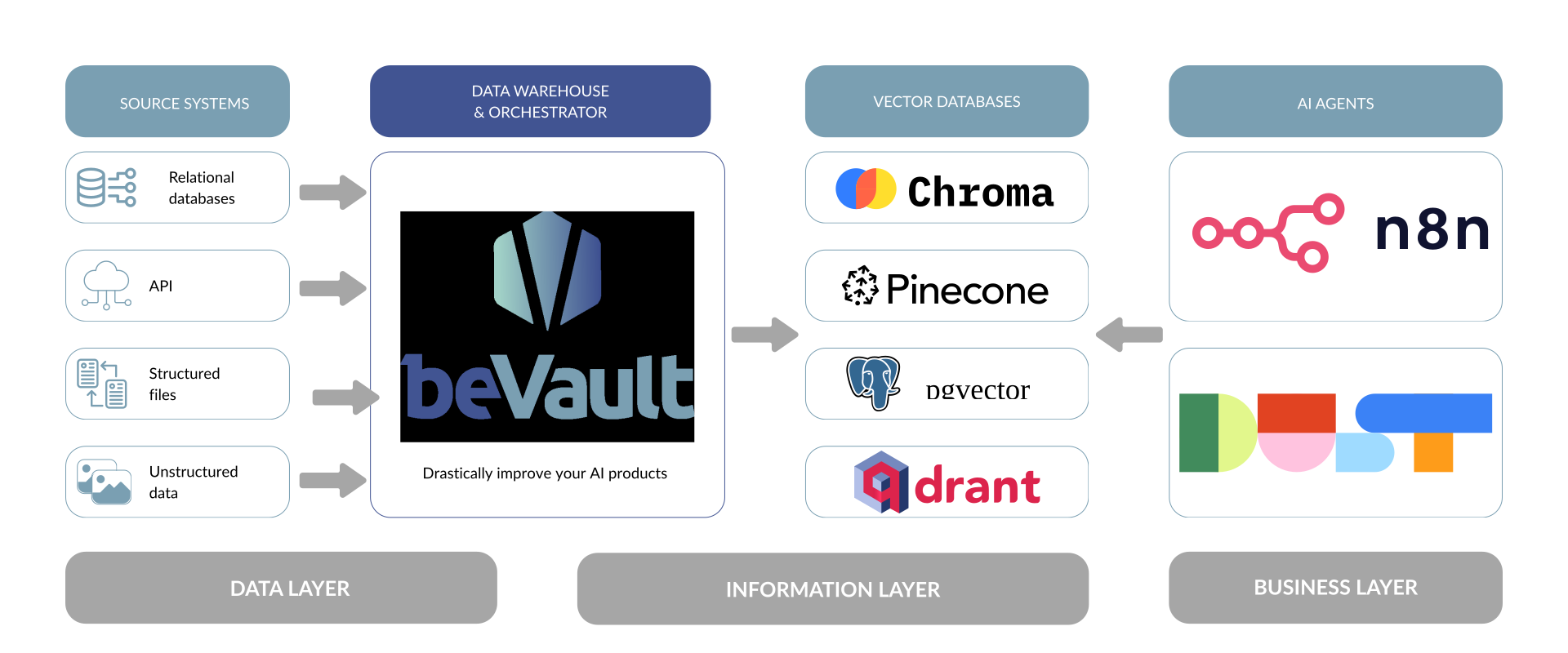
Process
How the engagement unfolds
- 01
Scoping
The decisions to inform, the use cases to serve, regulatory obligations, deadlines and budget constraints.
- 02
Current-state assessment
Existing sources, warehouses and processes, breaking points, dependencies on individuals, technical debt and blind spots.
- 03
Priorities & recommendations
What must be addressed first, what can wait, and what isn't relevant at this stage — with a reasoned recommendation, including when the right decision is to change nothing.
- 04
Target architecture
Data model, target platform, deployment mode, integration into the application landscape, governance and a phased evolution path. The target architecture describes a realistic trajectory; it doesn't assume everything must be replaced immediately.
Topics covered
What the engagement covers
The scope is adapted to your context, but these topics are systematically addressed.
Objectives and use cases
The use cases that justify the investment: reporting, compliance, AI readiness, replacing an end-of-life system.
Current-state assessment
A factual reading of the current setup, including the workarounds teams have put in place to keep things running.
Priorities
A domain-by-domain sequencing, to deliver something useful before the program ends.
Target architecture
How the components fit together, what is generated, what remains custom-developed, and why.
Deployment and sovereignty
Where components run, who operates the infrastructure, and which regulatory constraints apply.
Governance and evolution
Who decides on definitions, how the model evolves and how new sources are integrated after the engagement.
Next step